

The Materials Sector Explained
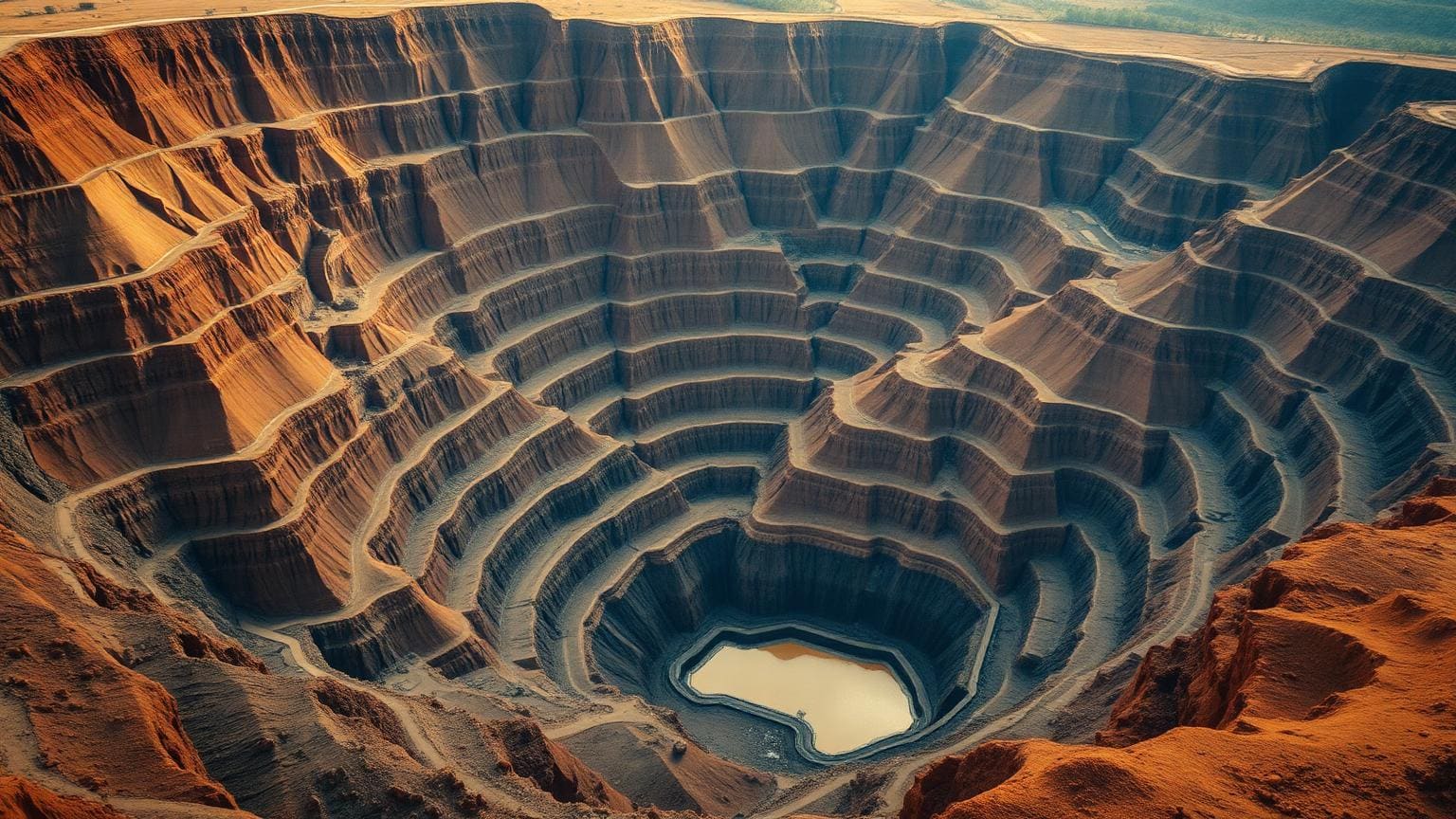
The Materials sector supplies the physical stuff everything else is made from — the metals, chemicals, cement, and packaging behind every building, gadget, and product. It's one of the smallest slices of the market by weight, yet one of the most revealing, because demand for raw materials is a direct read on whether the global economy is speeding up or slowing down. It's also quietly central to the energy transition. This article explains what's in it and what moves it.
New to investing? Read straight through. Already know why copper is called "Dr. Copper"? Skip to Going Deeper.
The basics
The Materials sector consists of companies that discover, extract, and process the raw inputs of the economy. Its main groups are:
- Chemicals — the largest piece, spanning commodity chemicals, specialty chemicals, and industrial gases. Examples include Linde (industrial gases, the sector's largest company), Sherwin-Williams (paints and coatings), Air Products, Ecolab, Dow, and DuPont.
- Metals and mining — companies that mine and process metals such as copper, gold, steel, and aluminium. Examples include Freeport-McMoRan (copper) and Newmont (gold).
- Construction materials — cement, aggregates, and the like.
- Containers and packaging, and paper and forest products — the materials that wrap and carry goods.
As of 2026, Materials is one of the smallest sectors in the S&P 500, around 2% of its value.
The defining trait is that Materials is deeply cyclical and commodity-price-driven. Its fortunes rise and fall with global industrial demand, which makes it both volatile and a useful barometer of the world economy.

Going deeper
The sector's master drivers are global industrial demand, the economic cycle, and commodity prices. When factories are humming and construction is booming, demand for metals, chemicals, and building materials surges; when the economy cools, it slumps. Because so much heavy industry is global, the sector is especially sensitive to growth in major manufacturing economies — China above all, as the world's largest consumer of industrial metals. Materials is often described as an early-cycle sector: demand for raw inputs tends to pick up as an economic recovery begins.
As with other sectors, though, the pieces diverge sharply, and lumping them together is a mistake. Industrial-gas and specialty-chemical companies — Linde, Sherwin-Williams, Ecolab — are relatively steady, high-quality businesses with pricing power, behaving more like quality compounders than commodity plays. Commodity chemicals and miners, by contrast, are price-takers: their profits swing violently with the price of what they sell. Gold miners are a special case altogether — tied to the gold price, they can move counter to the economy and act as a safe-haven-linked play rather than a growth one. And copper is the sector's famous bellwether, nicknamed "Dr. Copper" for its supposed PhD in economics: because copper is used in almost everything, its price is treated as a real-time signal of global growth.
The most important structural theme is the energy transition. Electrification, electric vehicles, grids, and renewables are enormously metal-intensive — copper, lithium, and other materials are essential to them — which gives certain miners a powerful multi-year demand story beyond the ordinary cycle. The sector also tends to carry an inflation linkage, since raw-material prices are themselves a component of inflation.
The risks mirror the drivers: violent commodity-price swings, dependence on global growth (and on China in particular), exposure to energy and input costs (chemicals are energy-hungry to produce), and significant environmental regulation, especially for miners.
How it's tracked: the benchmark is the S&P 500 Materials index, and the most common fund following it is the Materials Select Sector SPDR (ticker XLB).
A useful way to read the sector is as the market's commodity-price barometer with a quality split running through it. On one side sit the price-takers — miners and commodity-chemical makers whose fortunes are dictated by prices they don't control, producing feast-or-famine results that can swing from huge profits to losses within a couple of years. On the other sit the specialty players — industrial gases, coatings, water-treatment chemicals — that sell differentiated products under long contracts, enjoy pricing power, and compound far more steadily. Investors often treat the two halves completely differently: one as a tactical bet on the commodity cycle, the other as a long-term quality holding that merely happens to sit in "Materials."
Two further drivers are worth flagging. Currency and global trade matter a great deal, since materials are priced and sold worldwide; a stronger or weaker dollar moves commodity prices and exporters' competitiveness. And supply discipline can matter as much as demand: a mine takes years to build, so when producers under-invest, shortages and price spikes can follow years later — and when they over-invest, gluts crush prices. The sector's cycles are as much about supply as demand, which is part of why they're so hard to time.
Common mistakes
- "Materials is just mining." Mining is only one part. The biggest piece is actually chemicals — including specialty chemicals and industrial gases — alongside construction materials and packaging.
- "All materials stocks track the same commodity." A gold miner, an industrial-gas company, and a packaging firm have completely different drivers. The sector is far from uniform.
- "It's tiny, so it's not worth understanding." Small in weight (~2%), but a key signal of global growth and a central play on the energy transition. Its message matters more than its size.
- "Materials only do well during inflation." It's cyclical first. Materials can lag even with high prices if demand is weak, and can do well when demand is strong — demand, not just price, drives it.
Frequently asked questions
What companies are in the Materials sector? Chemical makers (Linde, Sherwin-Williams, Dow, DuPont, Ecolab), metals and mining firms (Freeport-McMoRan, Newmont), construction-materials producers, and packaging and paper companies.
Why is the Materials sector so cyclical? Because demand for raw inputs rises and falls with global industrial activity and construction. When the economy expands, materials demand surges; when it slows, demand drops, making the sector volatile.
Why do investors watch copper? Copper is used in almost everything, so its price is treated as a real-time gauge of global economic health — earning it the nickname "Dr. Copper." Falling copper prices can signal a slowdown.
Are gold miners part of the Materials sector? Yes, under metals and mining. They're a special case: tied to the gold price, they can move counter to the economy and behave more like a safe-haven-linked play than a growth one.
What's the energy-transition angle? Electrification, EVs, and renewables are highly metal-intensive — needing large amounts of copper, lithium, and other materials — giving certain miners a strong multi-year demand story.
Why is Materials such a small part of the index? Because the companies are worth far less in aggregate market value than mega-cap technology or financial firms, even though their products are physically essential to the economy.
Are all Materials companies volatile commodity plays? No. Miners and commodity-chemical makers are volatile price-takers, but specialty players — industrial gases, coatings, water treatment — sell differentiated products with pricing power and tend to compound much more steadily.
Does supply matter as much as demand in this sector? Often, yes. Mines and plants take years to build, so under-investment can cause shortages and price spikes years later, while over-investment causes gluts that crush prices — part of why the sector's cycles are so hard to time.

The takeaway
- The Materials sector supplies the economy's raw inputs — chemicals (its largest piece), metals and mining, construction materials, and packaging.
- It's deeply cyclical and commodity-price-driven, sensitive to global growth and especially China, which makes it a useful early-cycle barometer of the world economy.
- Its pieces diverge widely — steady specialty chemicals versus volatile miners, with gold a counter-cyclical special case — and it's central to the metal-hungry energy transition.
Educational, not advice
This article explains how the Materials sector works. It is not financial advice and is not a recommendation to buy or sell any stock, sector, or fund. Sector investing carries risk, including commodity-price and global-growth risk; do your own research and consider professional guidance before making decisions.
Sources
- S&P Dow Jones Indices — GICS sector definitions and S&P 500 Materials index methodology.
- S&P 500 sector weight data (as of early 2026; weights change — re-verify at publish time).
- Public commentary on chemicals, metals, and commodity cycles (used for background; all wording original).