

Index Funds and Passive Investing: Tracking the Market Explained
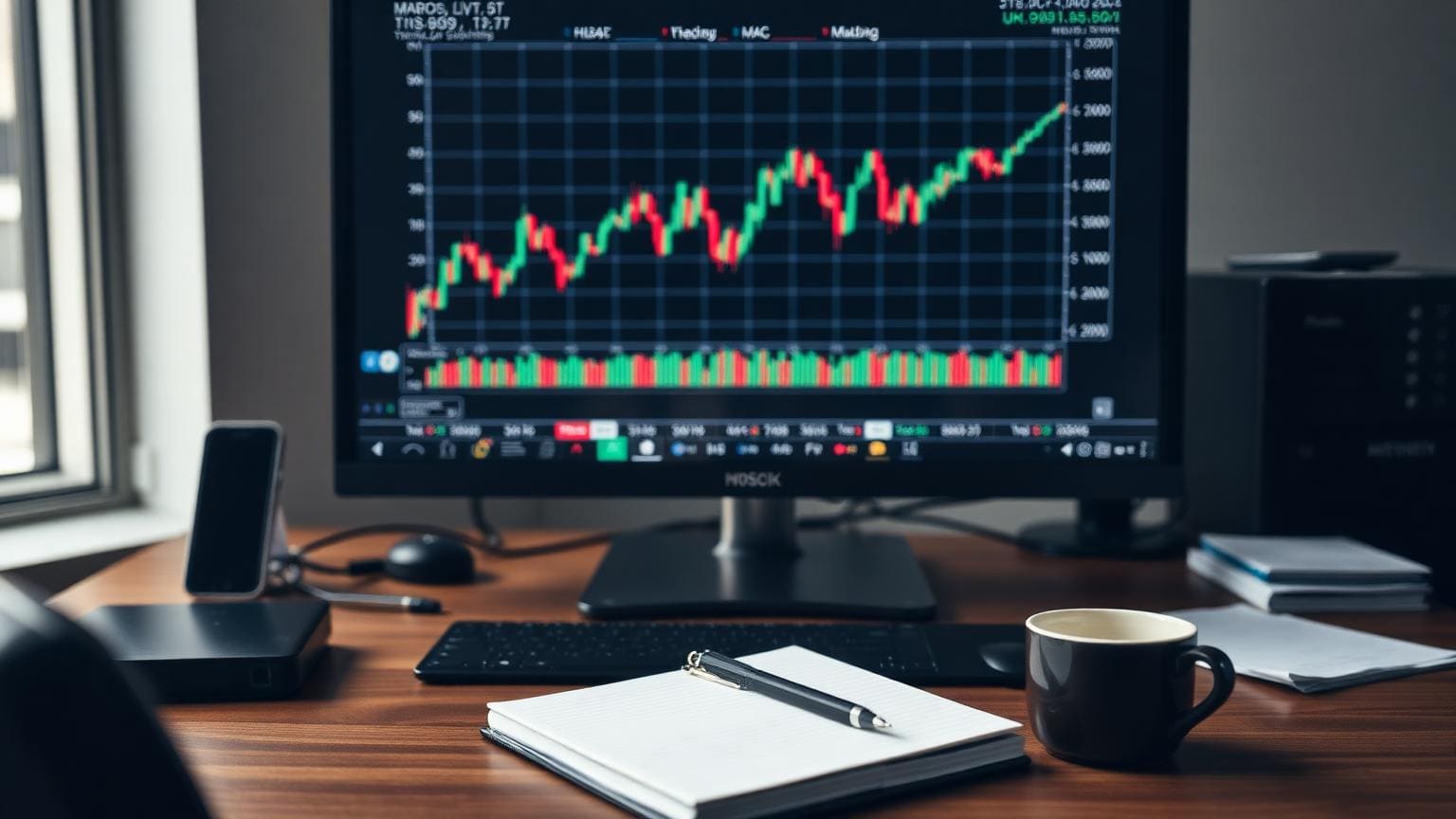
In 1976 a fund manager named John Bogle launched something that sounded almost defeatist: a fund that would not even try to beat the market, only to match it. Critics called it "Bogle's folly." Fifty years on, index funds and their ETF cousins hold trillions, and the once-radical idea, that quietly tracking a market beats most attempts to outsmart it, is mainstream. Understanding how index tracking works, and where it quietly falls short, is essential before you buy any tracker, whether it is an OEIC or an ETF.
The basics
An index is just a defined list of holdings and a rule for weighting them. The S&P 500 is the 500 or so largest US companies, weighted by market value. The FTSE 100 is the largest companies listed in London. The MSCI World tracks large and mid-sized companies across developed markets. An index is a measurement, not something you can buy directly.
An index fund is a fund built to replicate a chosen index as closely as possible, so its return mirrors the index's return, minus costs. It does this by holding the index's constituents in roughly the same proportions. Because there is no stock-picking, costs are low and the manager's job is mechanical: when the index changes, the fund adjusts to match.
This is the essence of passive investing, accepting the market's return rather than betting on a manager to beat it. The case for it rests on two stubborn facts:
- Most active managers underperform their benchmark over the long run, especially after fees. Year after year, the majority of actively managed funds in most major markets fail to beat the relevant index over ten- and fifteen-year horizons.
- Cost compounds. A 0.8% active fee versus a 0.1% tracker fee may look trivial in one year, but over decades the gap, compounded, can consume a large share of your returns.
Passive is not guaranteed to win in any single year, and it offers no protection from market falls, a tracker follows its index down as faithfully as up. Its claim is narrower and well-evidenced: at low cost, it reliably captures the market's return, which most active alternatives fail to beat after fees.
Going deeper
A tracker's whole purpose is to match its index, so the key quality measure is how closely it does so. Two related terms capture this:
- Tracking difference is the actual gap between the fund's return and the index's return over a period. A good tracker's return lands just below the index by roughly its fee.
- Tracking error is the volatility of that gap, how consistently the fund shadows the index day to day. Low tracking error means a smooth, predictable shadow.
Several things cause a tracker to drift from its index:
- Fees. The ongoing charge is deducted from returns, so a fund will trail its index by approximately its OCF.
- Replication method. How the fund holds the index matters (see below).
- Cash drag. Dividends received but not yet reinvested sit as cash and lag a rising market.
- Rebalancing and index changes. When the index adds or drops a constituent, the fund must trade, incurring costs and small timing gaps.
- Withholding tax on foreign dividends, which varies with the fund's domicile, a point that becomes important later in the series.
The two main ways a fund replicates an index:
Full (physical) replication. The fund buys every constituent in the index in the correct proportion. This is the most faithful method and is practical for liquid, well-defined indices such as the S&P 500 or FTSE 100. It is the gold standard for transparency, you own the actual companies.
Sampling (optimised replication). For indices with thousands of holdings, or with illiquid components, buying every constituent is expensive or impractical. Instead the fund holds a representative subset chosen to behave like the full index. A global aggregate bond index containing tens of thousands of bonds is a classic case. Sampling keeps costs down but introduces a little more tracking error, the sample never behaves exactly like the whole.
A third method, synthetic replication using swaps, does not hold the assets at all; it gets the index return via a contract with a bank. Because synthetic replication carries its own counterparty considerations, it gets its own article later in the series.
Most index funds are weighted by market capitalisation, bigger companies get a bigger slice. This is cheap to run and self-adjusting, but it means a cap-weighted fund automatically tilts toward whatever has already risen most. In recent years that has concentrated large US indices heavily in a handful of giant technology names, so a "diversified" S&P 500 tracker can carry more single-stock and sector concentration than its 500-stock label suggests. Alternative weightings exist, equal weight, fundamental weight, and others, which trade higher fees and different risks for less concentration.
Common mistakes
- Believing index funds are risk-free. A tracker removes manager risk and stock-selection risk, not market risk. When the index falls, so does the fund.
- Ignoring concentration. A market-cap tracker can be far less diversified than it appears when a few names dominate the index. Check the top-ten holdings before assuming broad exposure.
- Choosing a tracker on fee alone. The cheapest fund is not always the best tracker. Compare tracking difference over several years, not just the headline OCF.
- Confusing the index with the fund. You cannot buy "the FTSE 100"; you buy a fund that tries to replicate it. Two funds tracking the same index can deliver slightly different returns.
- Assuming all "S&P 500 funds" are identical. Domicile, replication method, share class, and currency hedging all create small but real differences.
FAQ
What is the difference between an index fund and an ETF? "Index fund" describes the strategy (tracking an index); "ETF" describes the wrapper (exchange-traded). An index fund can be an OEIC or an ETF, and an ETF can be index-tracking or active.
Why do index funds usually beat active funds? Mainly cost. Active funds charge more and, as a group, struggle to beat their benchmark after fees over the long term. The low-cost tracker simply keeps more of the market's return.
What is a good tracking error? For a liquid equity index tracker, an annual tracking difference close to the fund's fee, and a low, stable tracking error, indicates a well-run fund. Larger or persistent gaps deserve scrutiny.
Is a market-cap index well diversified? By number of holdings, yes; by concentration, not always. When a few large companies dominate an index, the fund inherits that concentration. Check the top holdings.
The takeaway
Index funds turn a humble idea, match the market cheaply rather than try to beat it, into one of the most effective tools available to ordinary investors, and the evidence on cost and long-run active underperformance explains why so much money has followed. The craft lies in execution: how faithfully a fund tracks its index, measured by tracking difference and tracking error, and how it replicates it, fully or by sampling. Just remember that a cap-weighted tracker is only as diversified as its index. Next, we turn from strategy to evaluation: how to read an ETF's fact sheet and judge its cost, size, and liquidity.
Educational not advice
This article is for general educational purposes only and is not financial or investment advice. Past performance and historical comparisons do not predict future results. Indexing does not protect against market losses. Consider advice from a regulated professional before investing.
Sources
- S&P Dow Jones Indices, SPIVA scorecards (active vs passive performance)
- Vanguard and the writings of John C. Bogle on indexing
- Morningstar, tracking difference and replication research
- FTSE Russell and MSCI, index methodology documents